
Lehigh Projected Versus Actual Release
A projected or scheduled date is an estimate or legal milestone. An actual release date records what occurred. Pennsylvania state sentences often carry a court-imposed minimum and maximum. The minimum is normally the first point for parole eligibility. The maximum is the outside sentence endpoint, subject to lawful credit and recalculation. Neither date promises the hour when a person will walk out.
Pretrial Lehigh County Jail custody works differently. A person awaiting trial has no sentence-based release date. Bail, dismissal, a new court order, another warrant, or a detainer can change the outcome. Even after bail is posted, LCJ must complete processing and check other holds. A county-sentenced person’s date depends on the sentencing order, credit, county authority, and any parole action.
- Minimum date
- The usual state parole-eligibility point, not promised release.
- Maximum date
- The calculated sentence endpoint, subject to lawful recalculation and overlapping obligations.
- RRRI minimum
- A separate incentive-based eligibility point for a qualifying sentence.
- Detainer
- A hold or request from another authority that can change where a person goes.
Find Lehigh County Release Dates
Start with the sentence and last confirmed facility. The UJS Case Information portal can show bail, disposition, confinement terms, credit, and later court action. It explains legal authority, but not always the physical exit time. For a Lehigh County Jail stay, ask Corrections for the actual release or transfer entry. For state custody, use PADOC’s current locators and records channels.
- Match the person to the correct docket with name, date of birth, docket number, OTN, or another reliable identifier.
- Read the certified sentencing terms, including concurrent or consecutive sentences and credit for time served.
- Identify the last facility: LCJ, the Community Corrections Center, a Pennsylvania SCI, federal custody, or ICE.
- For current state custody, search PADOC Inmate Locator using the inmate number or name, committing county, age, and other matching fields.
- For county custody, use the Corrections/Jail Inquiry or request the existing actual-release or transfer record.
- If parole is involved, obtain the Board Action and verify that all conditions, plans, and detainers were resolved.
- Confirm the event through the releasing institution’s timestamped record.
The local Lehigh public records portal notes that its data run through the prior business day. That makes it useful for context, not a same-minute exit clock. A current court entry may also show what was ordered before jail processing ends.
The official UJS court portal supplies the criminal docket search used in a Lehigh County release date timeline.
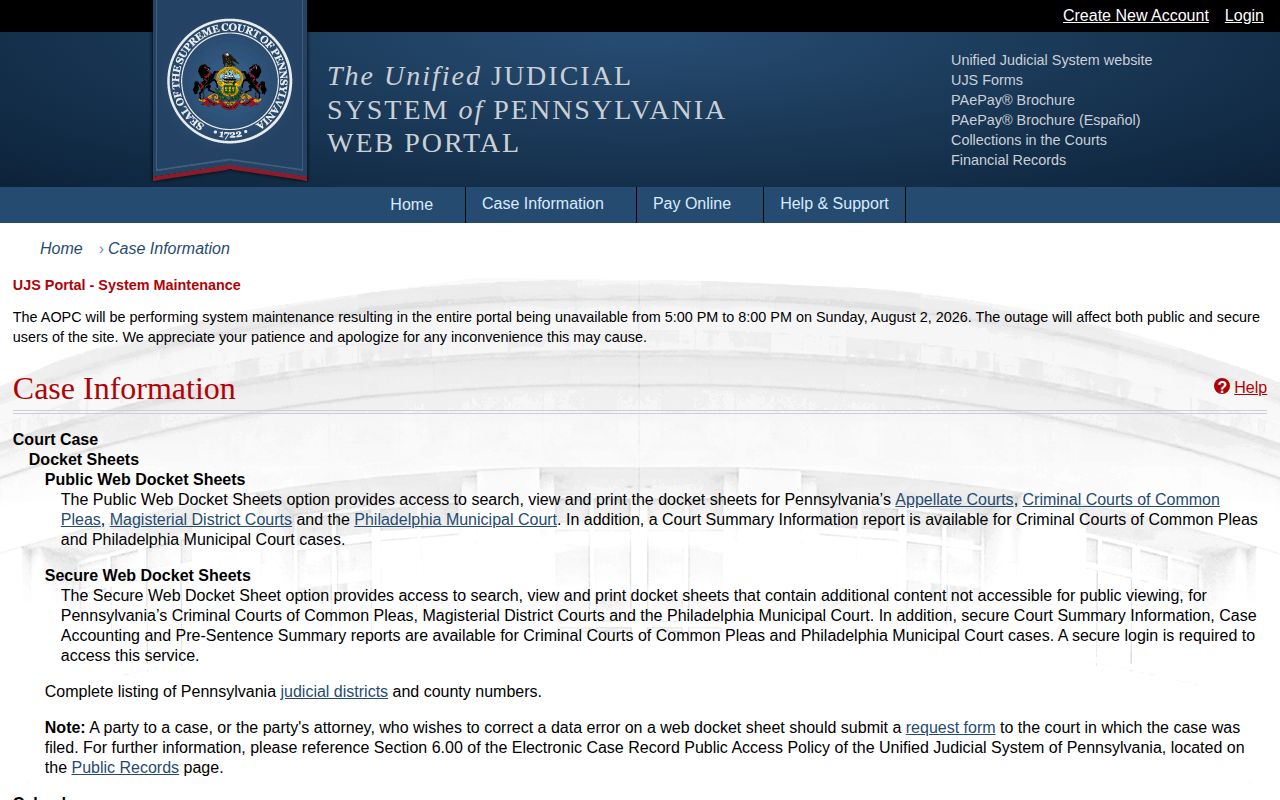
The docket can establish sentence and court action, while the jail or prison entry establishes physical departure.
PADOC Lehigh Release Date Fields
The PADOC portal has two current-status tools. Inmate Locator covers people currently under DOC jurisdiction. Department Supervised Individual Locator covers people currently under DOC supervision. Search fields include first, middle, and last name; inmate or parole number; gender; committing county; current location; citizenship; date of birth or approximate age. PADOC says the information is updated daily and suggests using only the last name when a narrow search fails.
The official interface does not promise a public field literally called “projected release date” or “tentative release date.” It also does not promise a historical released or discharged result. If a live record shows a minimum, maximum, RRRI minimum, or another date, keep the exact label and explain what it means. Never rename a minimum date as the projected release date.
| PADOC item | Correct interpretation |
|---|---|
| Inmate Locator match | The person is currently under PADOC prison jurisdiction. |
| Supervised Individual match | The person is currently under PADOC field supervision, which may follow parole. |
| Minimum date | Ordinary parole eligibility, not a guarantee. |
| Maximum date | Calculated sentence endpoint, not necessarily a processing timestamp. |
| No match in either mode | Ambiguous; it may reflect discharge, no DOC role, search error, lag, or another jurisdiction. |
The official PADOC locator displays the current inmate and supervised-person search modes.
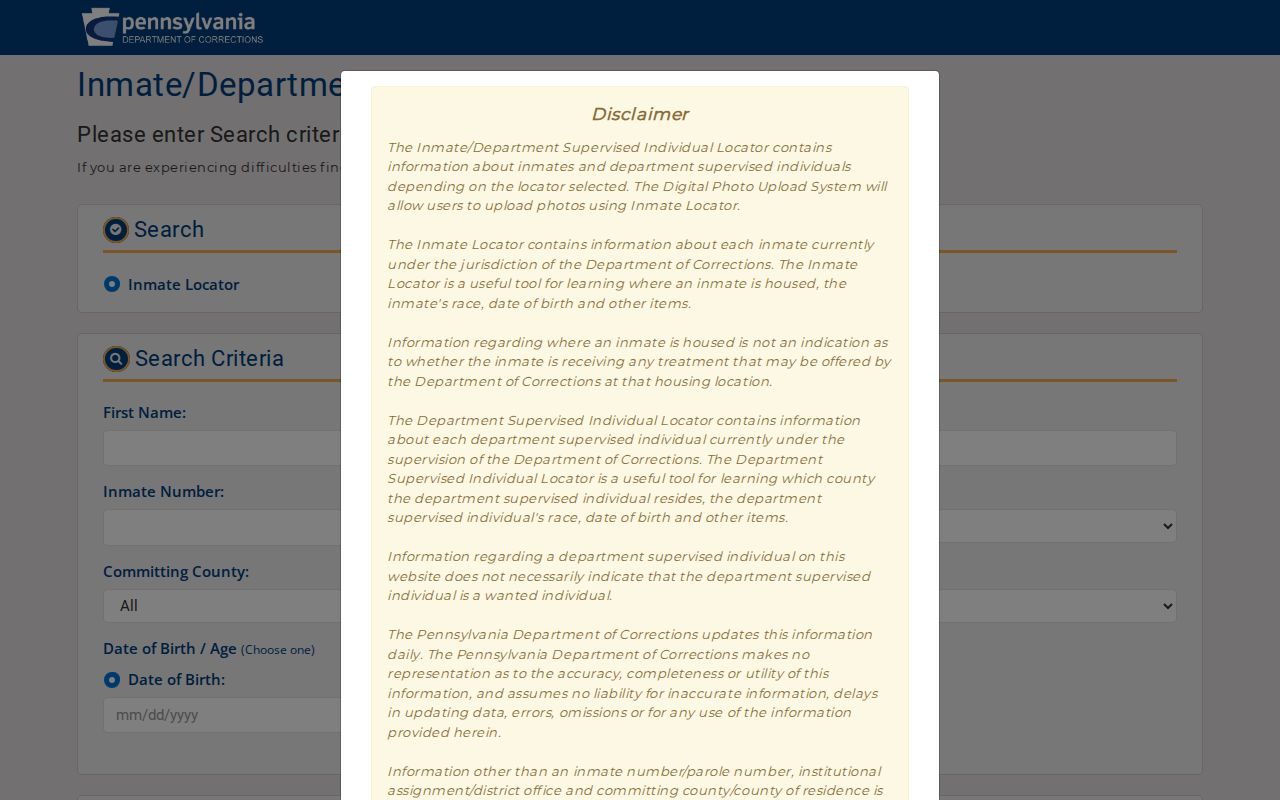
The paired tools can show a move from prison custody to parole supervision, but full discharge may end visibility in both.
Note: PADOC Central Records, Board Action, and the sentencing docket are needed when a fully discharged person no longer appears.
Pennsylvania Has No 85% Rule
The Pennsylvania Parole Board expressly says an inmate does not have to serve 85 percent of the maximum sentence to be paroled. That percentage comes from other systems and must not be applied to a Pennsylvania state sentence. The federal good-conduct rule often described as 54 days per year is also not the calculation for a Lehigh County or Pennsylvania state term.
Under 61 Pa.C.S. § 6137(a)(3), the Board generally cannot release a person before the court-fixed minimum. Ordinary Board parole is unavailable for life and death sentences. Reaching the minimum creates eligibility for review. The Board can refuse parole or grant it subject to conditions. A grant before maximum means the rest of the sentence is served in the community under supervision.
The Pennsylvania Parole Board’s official process page explains minimum and maximum dates and rejects the 85-percent myth.
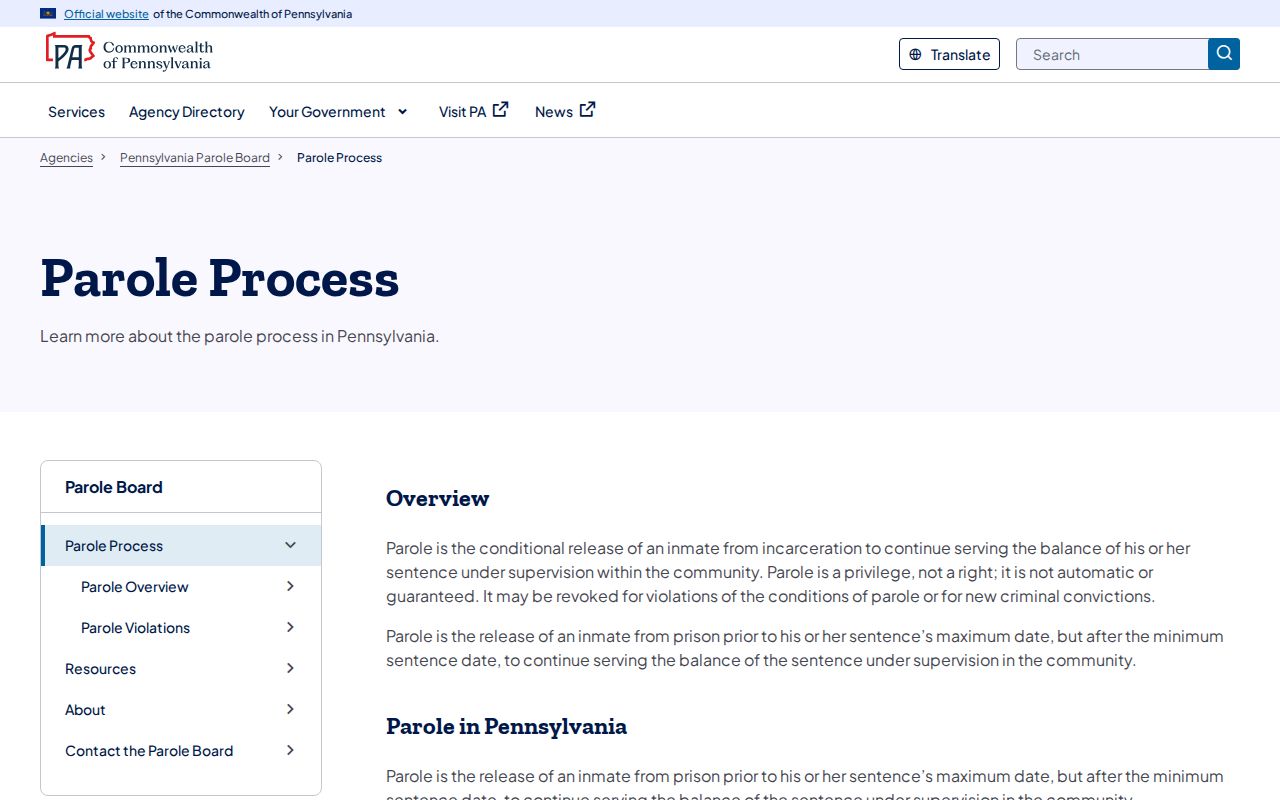
This rule prevents a common but serious error when estimating a Lehigh state-prison release date.
RRRI Dates for Lehigh Commitments
Pennsylvania’s Recidivism Risk Reduction Incentive is governed by 61 Pa.C.S. Chapter 45. The sentencing court determines eligibility and imposes an RRRI minimum in addition to the ordinary minimum and maximum. Section 4505 generally calculates the RRRI minimum as three-fourths of a minimum term of three years or less and five-sixths of a minimum over three years. Eligibility exclusions in Section 4503 still apply.
An RRRI minimum is not automatic good time and does not guarantee release. At that point, Section 4506 still requires DOC certification and Board determinations, including required program completion, adequate release plans and conditions, and safety review. Short Sentence Parole under 61 Pa.C.S. § 6137.1 is a separate route for qualifying short state sentences. Neither rule should be applied to every person serving time at Lehigh County Jail.
For a defensible date, first aggregate concurrent and consecutive terms. Then apply lawful sentence commencement and credit. Identify ordinary minimum, maximum, and a separately imposed RRRI minimum. After that, check all other dockets, detainers, recommitment time, and recalculations. The Board Action and institution record complete the timeline.
Changes to Lehigh Release Dates
Release dates change because a sentence calculation is a legal and administrative process. Some events affect the date itself. Others leave the date in place but change whether or where the person can be released. The final custody record should state whether the person entered the community or transferred elsewhere.
| Factor | Possible effect | Record to check |
|---|---|---|
| Amended sentence or credit | Moves minimum or maximum calculations | Court order and DOC or county calculation |
| Consecutive case | Adds time to the combined term | All sentencing dockets |
| RRRI certification or program issue | Affects the incentive eligibility route | DOC certification and Board record |
| Parole grant or refusal | Allows conditional release or keeps custody in place | Board Action |
| Detainer or warrant | Can delay community release or redirect custody | Facility entry and receiving agency record |
| Violation and recommitment | Can add backtime or cause recalculation | Revocation decision and PADOC calculation |
| Appeal or corrected judgment | May change the controlling sentence | Updated court docket and certified order |
A “review month” on a Board decision is not a right to release. Likewise, a future bail or release report does not establish the physical exit. Terms and dates must be read from the source that created them.
County Jail Release Date Records
A county sentence should not be run through a PADOC formula by default. Lehigh County Jail records, the sentencing order, county parole action, credit, other cases, and detainers govern the local calculation. The Community Corrections Center is also a county placement. A move from LCJ to CCC is not final release even when the resident later has approved community activity.
For a durable Lehigh record, ask Corrections for the admission and release entry showing actual date and time, disposition code and definition, and destination or receiving authority if maintained and public. County information is available at 610-782-3000, and the Corrections/Jail Inquiry provides the web channel. A formal request can use the county Right-to-Know process.
The record may say bail, dismissal, time served, county parole, sentence expiration, transfer, writ return, detainer pickup, hospitalization, or another maintained code. Only the actual local record reveals which term Lehigh used. Do not infer it from roster absence, since the county does not publish an official current roster or recent-release feed.
Confirm the Lehigh Release Event
Use a three-part confirmation. The court or Board record establishes legal authority. The releasing facility supplies the actual exit or transfer time. A receiving agency record can show continued custody or supervision. When those sources agree, the release date has strong support. When they differ, preserve each timestamp and ask the agency that created the conflicting entry.
PA SAVIN can provide a timely release or movement alert, but it is not a certified history. Registration steps are available on the Lehigh County VINE inmate check. For older state events, contact PADOC Central Records at RA-centechrecords@pa.gov or use the formal DOC Right-to-Know route. For a county event, request the Lehigh record. Federal and ICE events need separate timelines.
A state parole grant needs several checks. Obtain the Board Action, read each condition, and confirm the approved release plan. Then check the institution’s actual-release record and the PADOC supervised-person result. A grant may come before physical exit, and a detainer can change the destination. For a maximum discharge, look for the PADOC discharge or closing record because the current-only locator may no longer show the person.
Federal release dates belong to the federal system. A past date and location marked RELEASED in the BOP locator means the person is no longer in BOP custody, but federal supervision or another jurisdiction can follow. ICE ODLS has its own limited recent-release scope. Neither federal system can certify the date someone left LCJ unless it is documenting a later, separate custody event.
Note: Release from one facility does not rule out transfer to PADOC, another county, federal custody, ICE, a hospital, or CCC.