
Lehigh County Parole Versus Probation
Parole and probation both involve supervision in the community, but they begin in different ways. Pennsylvania state parole is conditional release from an SCI after the minimum date and before the maximum date. The Pennsylvania Parole Board makes that release decision. PADOC then performs field supervision. The sentence keeps running during parole. Probation, by contrast, is imposed by a court and does not always follow a term in jail or state prison.
Lehigh County also has county-level supervision. A county sentence may lead to county parole or probation through the local court system. That does not make the person a state parolee. The sentencing docket, parole order, and assigned office reveal which system controls the case. Where several dockets exist, more than one supervision period may be active.
| Record type | Decision maker | Best verification |
|---|---|---|
| State parole | Pennsylvania Parole Board | Board Action, PADOC supervised-person result, and district office |
| County parole | Lehigh County court or county authority | Sentencing docket and Lehigh Adult Probation/Parole |
| Probation | Sentencing court | Court order, docket entries, and assigned probation office |
| Full discharge | Controlling agency or court after the lawful term ends | Closing or discharge record plus the docket or Board record |
- Parole
- Conditional community release while part of a prison sentence remains.
- Probation
- A court-ordered sentence served under conditions in the community.
- Discharge
- The formal end of the relevant custody or supervision term.
- Absconder
- A supervised person alleged to have stopped reporting or left supervision without permission.
Check Lehigh County Supervision
Begin with the court record, not a guess based on where the person was once held. The Pennsylvania UJS Case Information portal can show sentencing, probation, parole, violation, and termination entries. Lehigh County’s local adult probation/parole office handles county-sentence matters. PADOC’s supervised-person tool covers current state supervision. It does not cover every county probationer or county parolee.
- Match the person to the correct Lehigh criminal docket using name, date of birth, docket number, OTN, or another reliable identifier.
- Read the sentence and later entries to identify county probation, county parole, or a state commitment.
- For a state case, search the Department Supervised Individual Locator and match the parole number, date of birth, committing county, and district office.
- For a county case, contact Lehigh Adult Probation/Parole and cite the docket rather than assuming the PADOC tool should contain the person.
- Confirm the end of supervision with the agency’s discharge or closing record. Do not treat a locator miss as proof.
A PADOC supervised result supports current state field supervision. It does not mean the person is wanted, does not disclose a home address, and does not prove completion of the sentence. PADOC says the portal is current-only and updated daily. Full maximum discharge may remove a person from both the inmate and supervised-person modes.
The official PADOC locator shows the two current-status modes and their search fields.
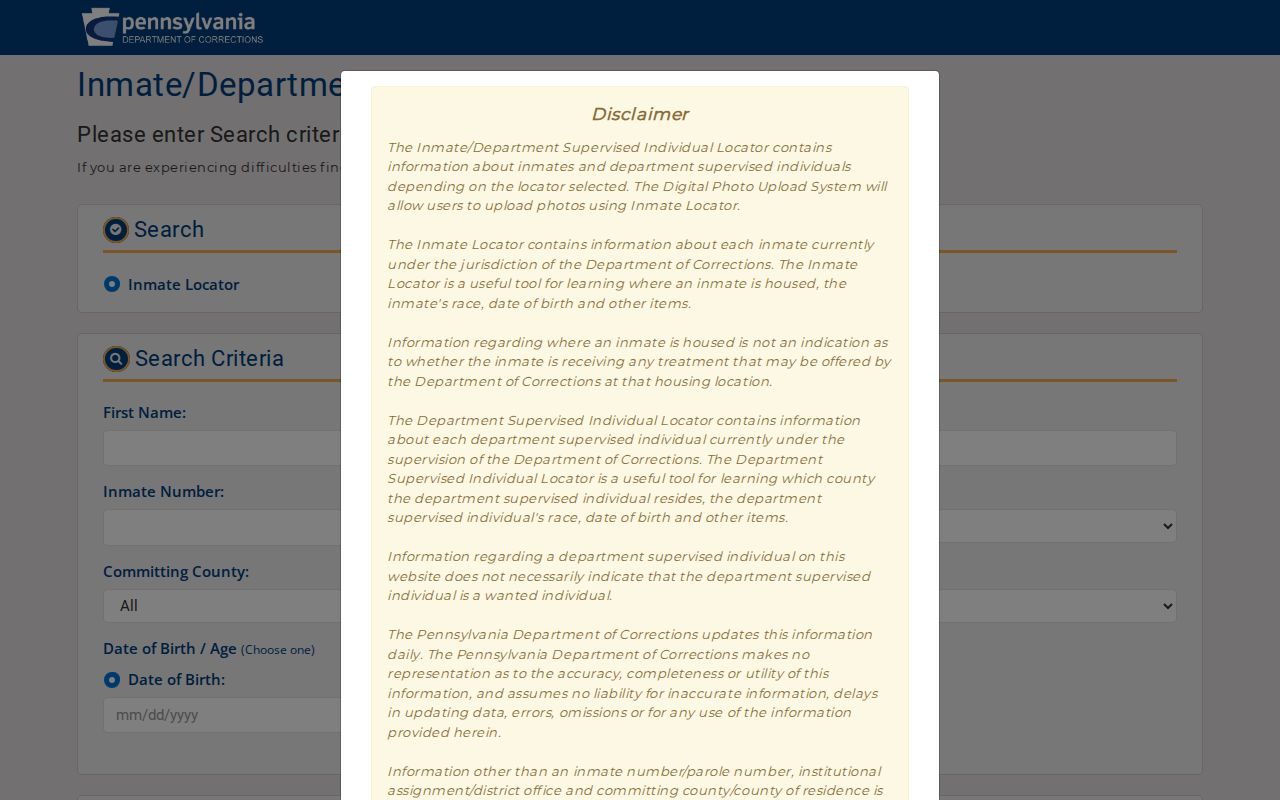
The separate modes help distinguish prison custody from state community supervision, but neither is a permanent discharge archive.
Note: A district-office match supports current state supervision, while the person’s own reporting instructions remain the controlling office assignment.
Lehigh Supervision Office Records
Two Allentown offices serve different kinds of Lehigh County post-release supervision. State parole field work is handled through the PADOC district structure. County probation and county parole matters go to the Lehigh County office. Call the office tied to the sentence. Staff may limit what they disclose, but a docket number and full identifying details help route a lawful status or records question.
PADOC Allentown District
2040 South 12th Street
Allentown, PA 18103
610-791-6157
Use for assigned Pennsylvania state parole supervision.
Lehigh Adult Probation/Parole
Lehigh County Courthouse
455 West Hamilton Street
Allentown, PA 18101-1614
610-782-3933
Fax: 610-871-2784
Use for county-sentence probation and county parole matters.
The official parole-office finder supplies the state route and current office guidance.
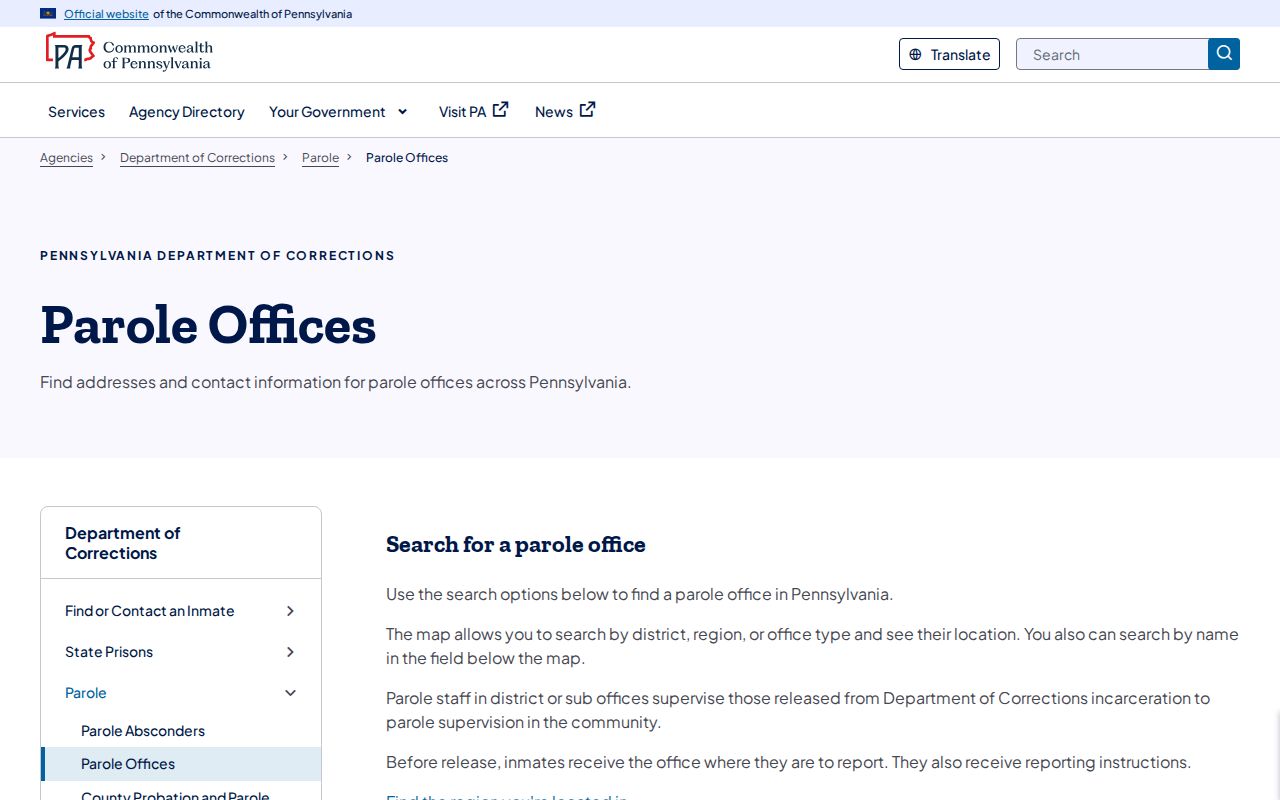
This state directory should be checked against the reporting office named in the released person’s own instructions.
Lehigh Parole Decision Records
The Pennsylvania Parole Board is not the Board of Pardons. The Board describes institutional interviews and says it processes hundreds of cases each month, but it does not publish a person-by-person Lehigh County hearing calendar or a searchable public decisions database. Do not use a clemency calendar as a parole schedule.
A PB-41 application generally need not be considered earlier than six months before the minimum date or during a Board-ordered reconsideration period. After review, the grant or refusal appears in a Board Action. That is the public decision document to request through the Board forms and procedures route. A grant may include conditions and does not prove immediate physical exit. An approved plan, a detainer, or another unmet condition may delay or redirect release.
The Board’s parole interview page explains its recurring institutional review process.
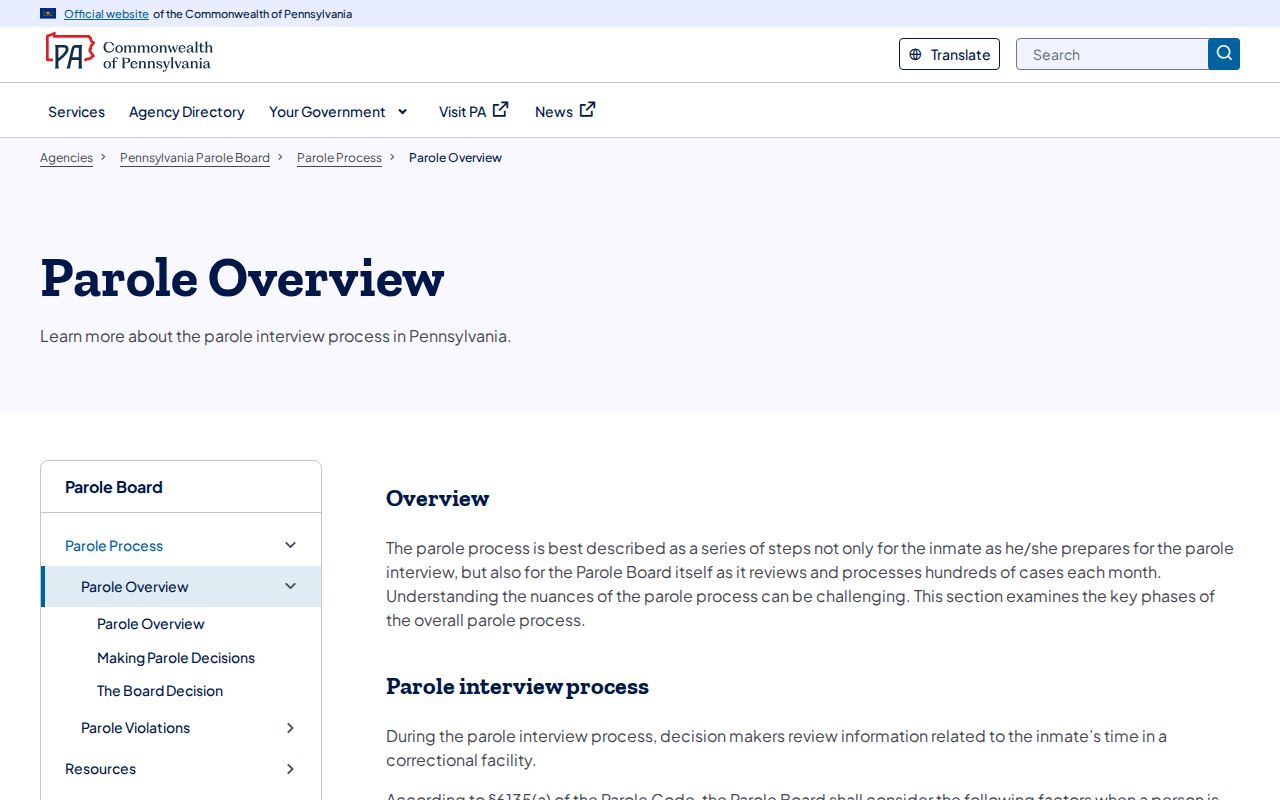
The process page establishes how reviews occur, while the Board Action and institution release entry answer the person-specific questions.
Lehigh Absconder Status Checks
A routine supervised-person listing is not a warrant result. PADOC maintains a separate Most Wanted Absconders search. Its listings identify names and counties, provide the tip line 800-932-4857 and email RA-CRabscondertips@pa.gov, and warn the public not to confront or try to apprehend anyone.
An absconder listing indicates a wanted status tied to state supervision. Its absence is not an all-warrants clearance. Courts, county authorities, and other agencies keep their own warrant records. A parolee may also face detention and recommitment after a violation, while a probationer may have a separate violation proceeding. Review the docket and contact the controlling supervision office when the exact legal status matters.
Conditions depend on the sentence, Board Action, and individual supervision plan. They may govern reporting, approved residence or travel, programs, and compliance with court or Board orders. A claimed violation is not the same as a final revocation decision. State revocation proceedings can result in continued parole or recommitment, while county probation violations return to the sentencing court. Use the actual order or decision instead of relying on a brief locator label.
PA SAVIN through VINELink can report supported state parole and custody changes, but it is not a warrant search or a discharge record. The Pennsylvania Megan’s Law registry is narrower still. It applies only to a person with a statutory registration duty and cannot be used as a general list of Lehigh County parolees or probationers.
The official absconder page carries the warning and state search.
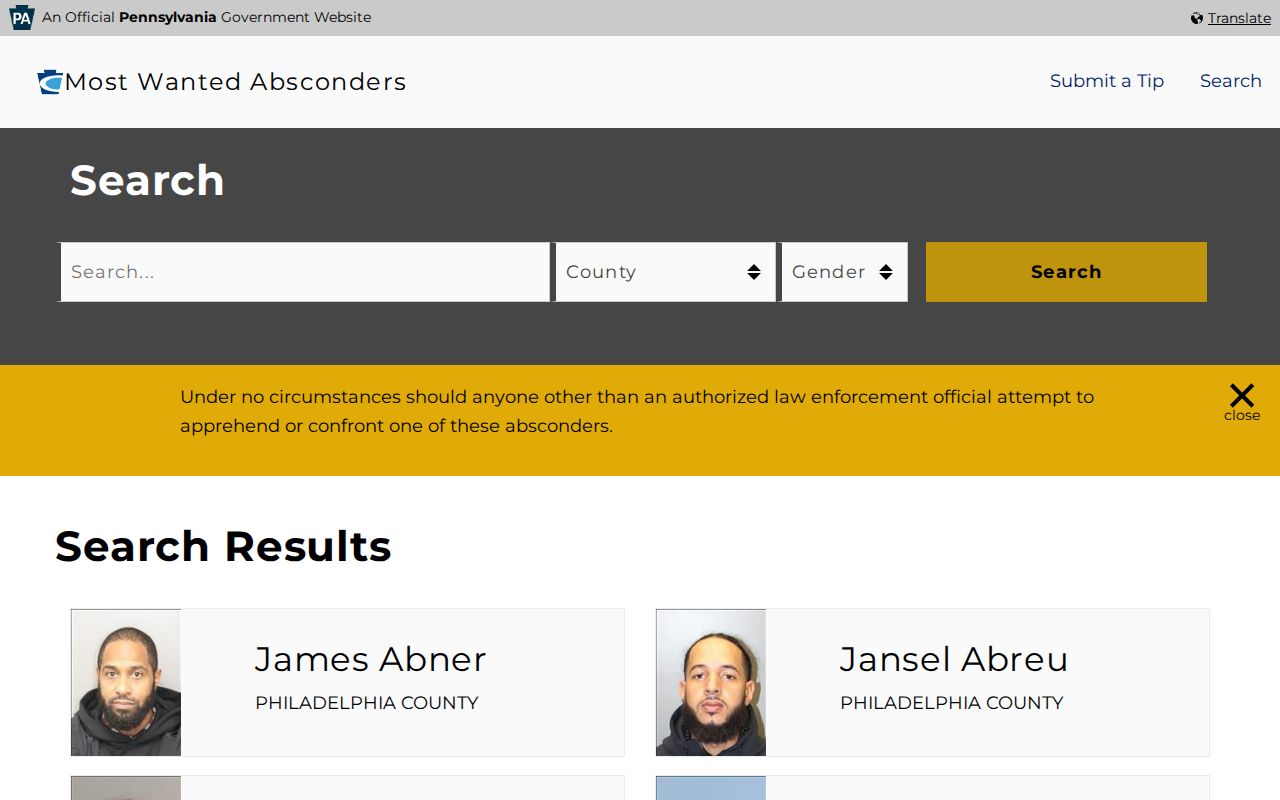
The dedicated absconder system must not be confused with an ordinary PADOC supervision record.
Note: Report a safety concern through the agency’s stated channel and do not approach a person based on an online result.
Lehigh Community Corrections Placement
Lehigh County’s Community Corrections Center creates an important local distinction. The county describes the 400-bed Bethlehem facility as an alternative setting for selected sentenced residents, with approved community activities and structured programs. A move from Lehigh County Jail to the CCC is a placement change. It is not final discharge. Nor does an approved trip into the community prove that the resident’s county custody has ended.
Confirm the resident’s actual exit through CCC or Corrections records, then identify any county or state supervision that follows. The sentencing docket may explain the legal basis, while the assigned probation or parole office can address the continuing term within its lawful disclosure limits. The county’s official CCC page is the source for the facility’s role. A full county release and records search is covered on the Lehigh County released inmates home page.
Lehigh Release Property Deadlines
Property records can matter after release, but they do not prove release to the community. Lehigh County Jail’s official guidelines say property left after permanent discharge must be retrieved within 30 days before disposal. Property tied to someone returned from the Community Corrections Center has a 10-day pickup period. An in-custody property release must cover all property and identify the inmate by the name on identification, inmate number, housing or cell, and the named recipient. That recipient must present identification.
The return of funds or property may occur after release or transfer. For that reason, a receipt should be read with the actual release or transfer record. If the record says PADOC, another county, federal custody, ICE, a hospital, or CCC, the person did not simply complete all custody. The supervising agency’s discharge record is the best proof that the post-release term later ended.
End Lehigh County Supervision
Supervision ends through a formal legal or agency event. For state parole, use PADOC closing records, the Board record, and the sentencing docket. For county probation or parole, use the Lehigh office’s discharge record and court entries. Multiple cases can end on different dates, so one closed docket may not settle every obligation.
A person can also move backward in the process. A parole violation may lead to detention and recommitment. A probation violation may produce a new court order. The most reliable timeline separates release from custody, the start of supervision, later violations or changes, and final discharge. That keeps a Lehigh County release status accurate without treating an online disappearance as proof.
For a state case, request the official Board Action when parole was granted or refused, then compare it with PADOC’s actual-release and supervision records. The Board’s public contact route is Pennsylvania Parole Board Contact, and its listed general email is RA-PMPBPPWEBCONTACT@pa.gov. Confidential review material is different from the public decision document, so the request should name the Board Action rather than ask broadly for the whole deliberative file.
For a Lehigh county case, cite the criminal docket, sentence, and known supervision dates when contacting the county office. Ask for the existing termination, discharge, or closing record that the office lawfully maintains. A docket entry can mark a court order, while an agency closing record can mark the operational end of supervision. If the dates differ, keep both in the timeline and ask which event each one represents.
Do not use PA SAVIN, the PADOC current locator, or a quiet period with no new docket entries as a substitute for discharge proof. Those sources can support the history, but each has a narrower role. The cleanest conclusion identifies the agency, the case, the type of supervision, the ending event, and the date stated by the record that created it.