
Lehigh Federal Custody Types
Lehigh County does not operate a federal prison. The official history of Lehigh County Jail says the jail also detains federal prisoners. In practice, federal custody must be divided by agency and stage. USMS handles federal pretrial prisoners, transport, and detention arrangements. BOP primarily handles people serving federal sentences. A person may therefore be held in a local contract bed without appearing as a current BOP inmate.
Leaving LCJ with the Marshals Service is not community release. It may be transport to court, another contract jail, a federal detention center, or a later BOP institution. A person released from BOP may still begin federal supervised release or face a state, county, or immigration detainer. The source should always name the authority from which release occurred.
| Federal stage | Main source | Release limit |
|---|---|---|
| Pretrial or transport custody | Federal docket and USMS | No public USMS former-prisoner locator |
| Federal sentence | BOP Inmate Locator | BOP status does not cover every other authority |
| Supervised release | Federal docket and supervising court records | Not physical incarceration |
| ICE or state pickup | Receiving agency | BOP release may start new custody |
Search Lehigh Federal Releases
The BOP Inmate Locator is the public search for sentenced federal custody records. Search by BOP register number or another listed federal identifier. The common register-number format is five digits, a hyphen, and three digits. A name search also permits optional race, age, and sex filters. Match the register number and other details before accepting the result.
- Search by federal number when it is available from the docket or a known BOP record.
- Otherwise search the exact name and add filters only when needed to separate matches.
- Read the result fields for name, register number, age, race, sex, release date, and location.
- Treat a past date with location “RELEASED” as release from BOP custody only.
- Check the federal docket and any state, county, or ICE record for what followed.
The official BOP locator screen shows the fields used for this search:
View the BOP Inmate Locator source before relying on a saved interface image.
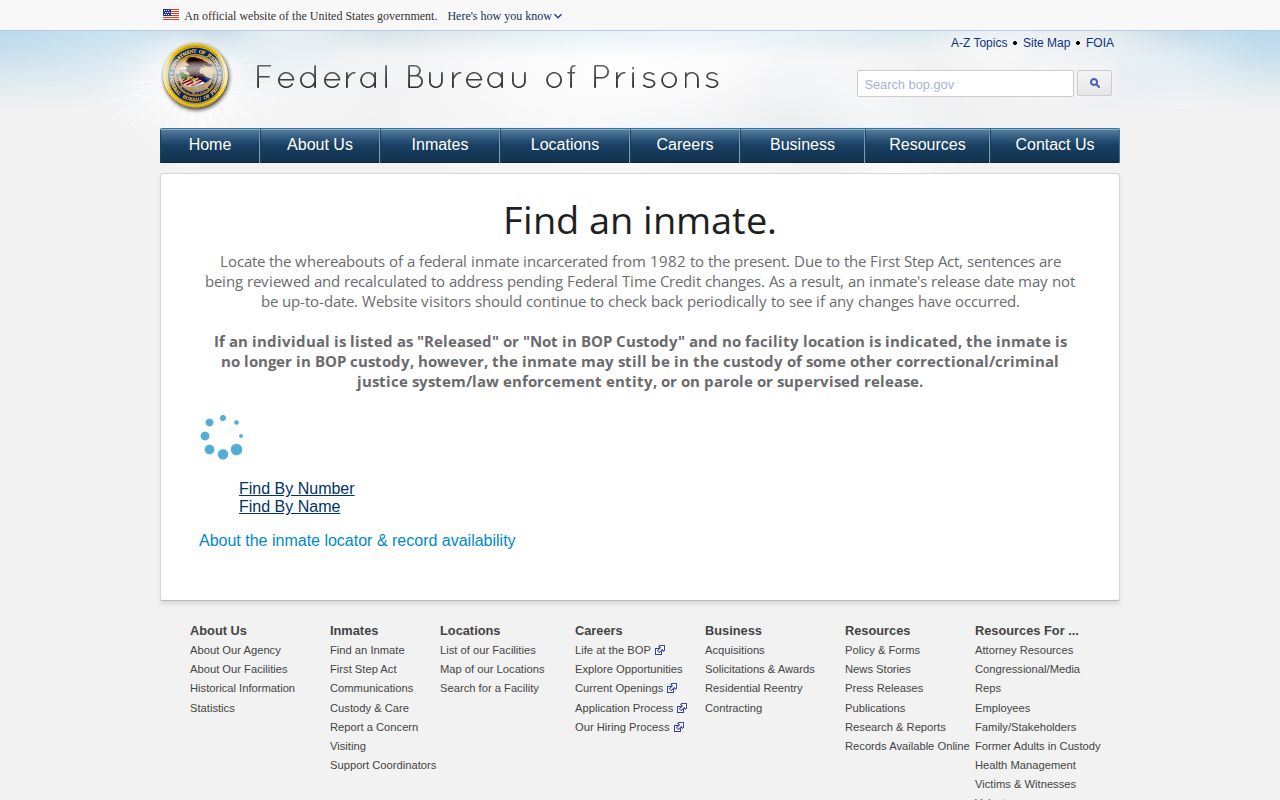
The image connects the Lehigh County federal check to the correct national locator rather than a county jail roster.
Read BOP Release Records
BOP explains that a past release date with no institution, or a location shown as “RELEASED,” means the person is no longer in BOP custody. It does not state that the person is free from every form of custody. A state warrant, county case, or immigration process can create a second custody episode. Federal supervised release can also follow incarceration under court-imposed terms.
BOP data generally cover 1982 to the present. For older imprisonment, the agency directs record research toward the National Archives using the name, date of birth or approximate age, race, and approximate prison dates. Release dates can change through lawful sentence-credit recalculation. A projected date should never be substituted for the historical actual-release field.
Note: Save the date checked and the register number because names alone can produce a wrong federal match.
Lehigh USMS Transfer Records
USMS does not provide a public former-prisoner locator comparable to BOP's tool. For a federal pretrial detainee or a person in transport, use the federal criminal docket to establish the court event and USMS prisoner operations information to understand agency responsibility. The local jail record can show that LCJ released the person to USMS, but only the receiving federal record can explain the next stop.
When no BOP match appears, do not declare federal release. The person may not have entered BOP custody, the record may use a different identifier, or transport may still be controlled by USMS. A formal information request can use the USMS FOIA route. Identify the person, federal case, date range, and specific movement or release record sought, subject to lawful exemptions.
The Lehigh County released inmates search is useful when the federal episode began with a departure from LCJ and the local transfer entry is still needed.
Federal Release Record Timeline
Federal records can show more than one defensible date. A judge may order release. A bond condition may be satisfied later. USMS then processes the physical exit or transfer. BOP records a sentence release when federal imprisonment ends. Supervision can begin afterward. If ICE or a state authority takes custody, another admission date follows.
Keep those dates separate. The court docket is strongest for legal authority and sentence terms. The releasing facility's timestamp is strongest for the physical event. A BOP result is strong for BOP status. A receiving authority's record is strong for continued custody. An absent locator result or a future-tense report is only a lead.
- USMS custody
- Federal pretrial, transport, and detention responsibility administered by the Marshals Service.
- BOP custody
- Federal incarceration administered by the Bureau of Prisons.
- Supervised release
- Court-ordered federal supervision after imprisonment.
- Detainer
- A request or authority affecting transfer or continued custody.
Lehigh Federal Contact Routing
Start with the agency that held the person at the time in question. For an LCJ episode, use the Lehigh Corrections Jail Inquiry and county release or transfer record. For a USMS movement, use the federal docket and the appropriate Marshals Service information or FOIA channel. For a BOP sentence, use the national locator and BOP records process. The research did not identify a BOP institution located in Lehigh County, so no local federal-prison address should be invented.
Federal Custody Record Routes
BOP: National Inmate Locator and BOP records
USMS: Federal docket, prisoner operations, and FOIA
LCJ: Corrections Jail Inquiry and county Open Records
Federal court: Case docket and clerk procedures
In-person access depends on the actual facility and its current rules. A Lehigh County address from an old detention episode does not identify the person's later federal location. Verify before travel or correspondence.
Federal and ICE Custody
Immigration detention is not BOP custody. If a BOP result says released and the record suggests immigration action, search the ICE Online Detainee Locator with exact identifiers. Conversely, an ICE locator miss does not alter the BOP record. The two systems use different populations, identifiers, and visibility windows.
Lehigh's ICE-detainer history is a reminder to check legal authority and physical custody as separate questions. An LCJ transfer entry, a federal release result, and an ICE admission can all be accurate on different dates. Report the complete sequence and avoid collapsing it into a single unqualified release.
Note: A later federal or immigration record should be obtained from that authority, not from Lehigh County simply because LCJ was an earlier stop.
Lehigh Federal Record Fields
A federal search works best when the local and federal identifiers are connected. From the Lehigh County episode, preserve the full booked name, date of birth, booking number, departure date, federal case number, and receiving authority. From the federal docket, capture the exact defendant name and case number. From BOP, use the register number. That chain reduces the risk of merging two people with similar names.
The BOP public result can show name, register number, age, race, sex, release date, and location. A displayed institution supports the BOP location represented by the result. “RELEASED” with a past release date supports departure from BOP custody. It does not identify every term of federal supervision and cannot exclude a later state, county, or ICE record. The federal docket supplies sentence and supervised-release context.
For a USMS-held person, ask for an existing movement or detention record tied to the federal case and date range. USMS pretrial and transport custody can pass through more than one facility. An LCJ record saying federal pickup closes the local episode, while a USMS or receiving-facility record explains the next step. An absent BOP result is expected in some pretrial situations.
Older BOP history requires care because the locator's general public coverage begins in 1982. The National Archives path is more appropriate for earlier federal imprisonment. Provide an approximate date range and identifying facts. Do not force an old case into the current locator or infer release merely because no modern result appears.
Federal sentence-credit changes can alter an expected release date. Preserve the label and date shown by the agency at the time checked. For a historical question, seek the actual-release record. For a planned date, explain that later lawful calculation or a detainer can change the result.
When correcting an error, send the exact disputed field to its creator. Lehigh Corrections controls its transfer entry, the federal court controls its docket, BOP controls its locator and sentence record, and USMS controls its own movement information. A change in one system may not update the others automatically.